
Ceramic tubes that unlock reliable tubular SOFC power.
EndureCell manufactures stable, thin-wall, microstructurally homogeneous ceramic tubes—the critical substrate that enables rugged tubular SOFC stacks for long-endurance drones, forward-deployed power, and silent watch.
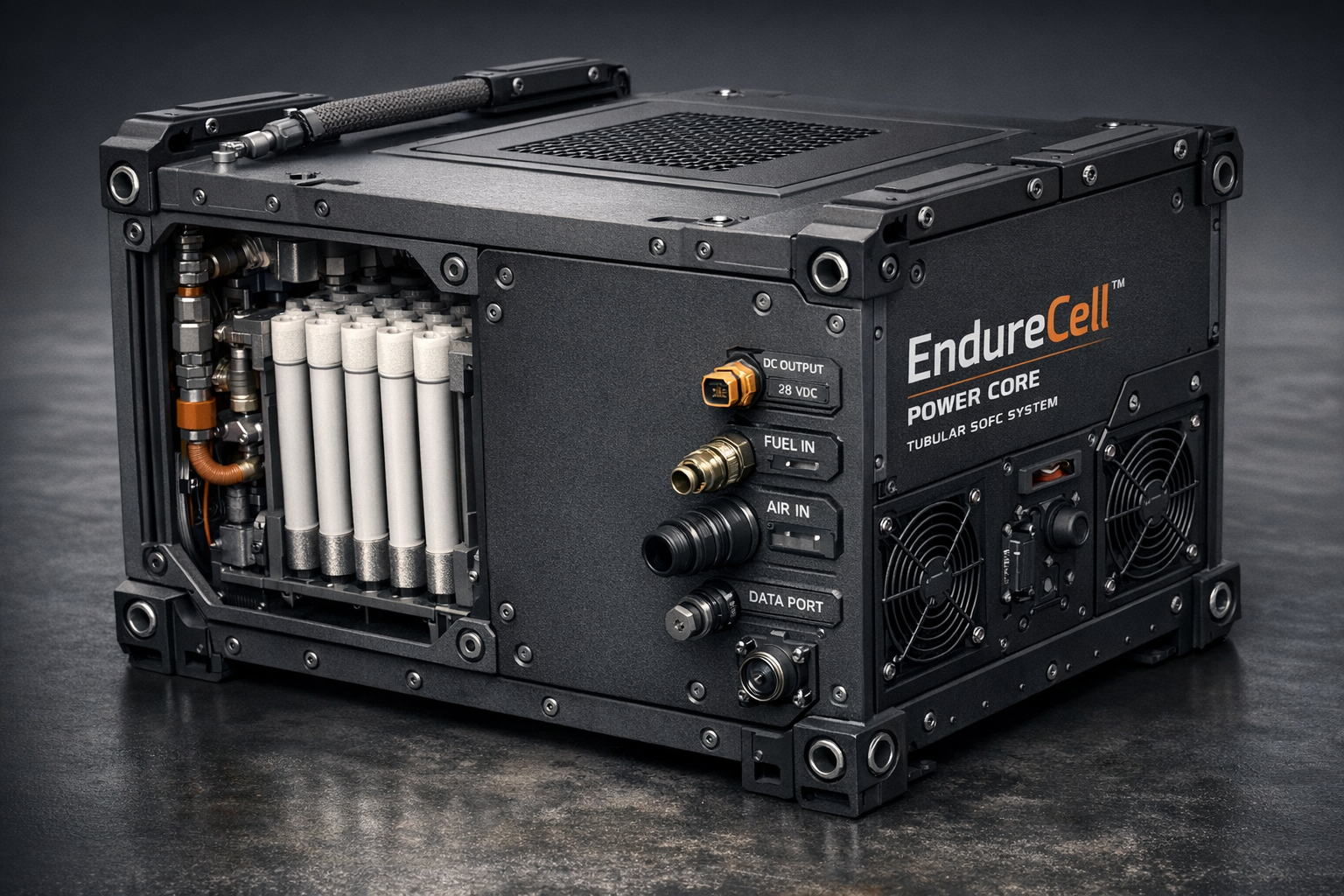
- ✓ Ceramic tube chassis (thin-wall, homogeneous, coating-ready)
- ✓ Controls + regulated DC output
- ✓ Serviceable balance-of-plant
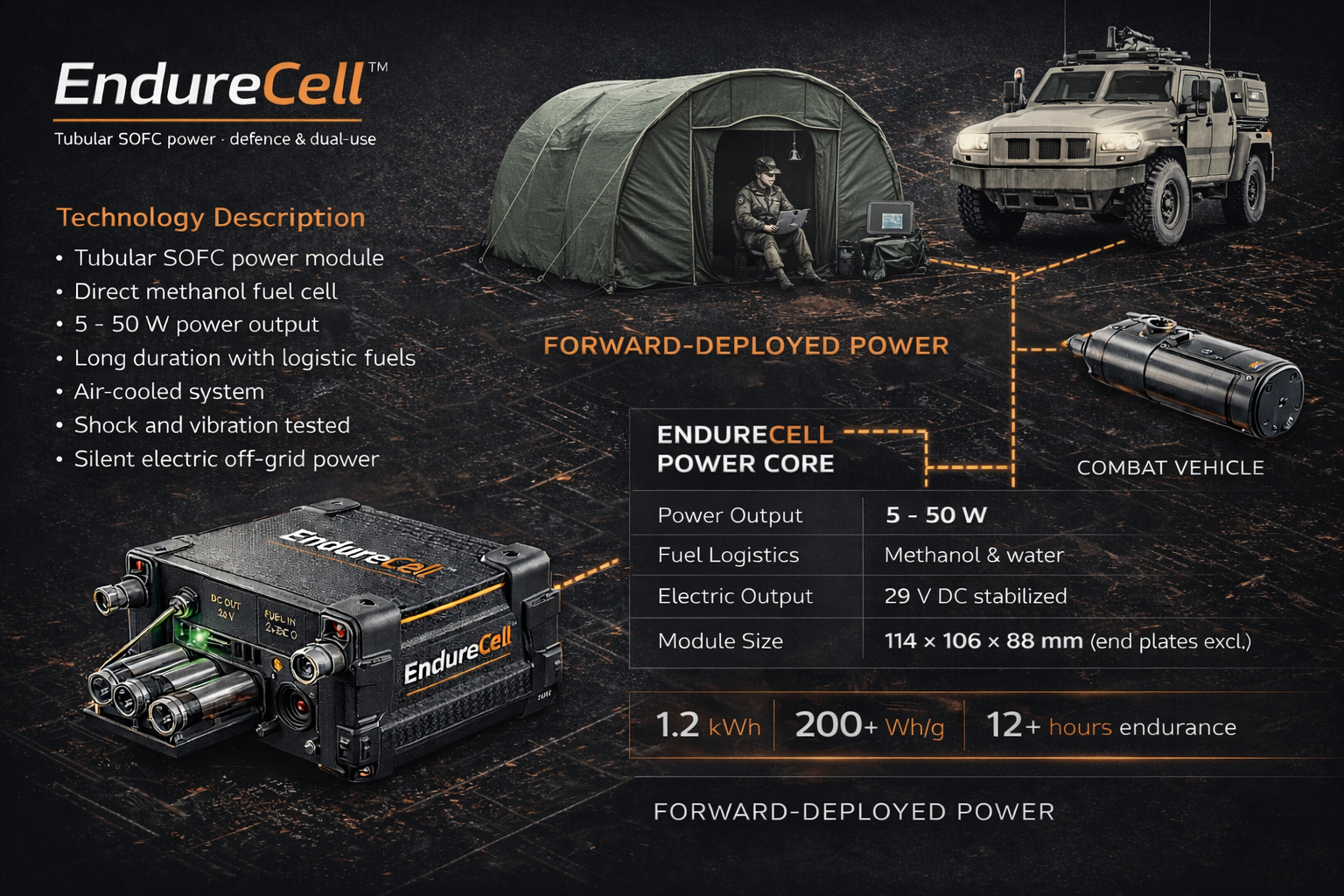
EndureCell™ Power Core
A rugged tubular SOFC power module designed as a range extender for long-endurance platforms. Delivered as a qualification-ready subsystem with defined mechanical, electrical, and fuel interfaces.
Where it fits
Key interfaces
At-a-glance
EndureCell™ Chassis: homogeneous ceramic tubes
Our proprietary tube manufacturing process produces stable, thin-wall, microstructurally homogeneous ceramic tubes optimized for uniform SOFC layer coatings and rugged operation.
What we control
How customers use it
Use cases that value endurance and reliability
EndureCell™ Power Core enables quiet, long-duration electrical power where batteries and small engines impose constraints.
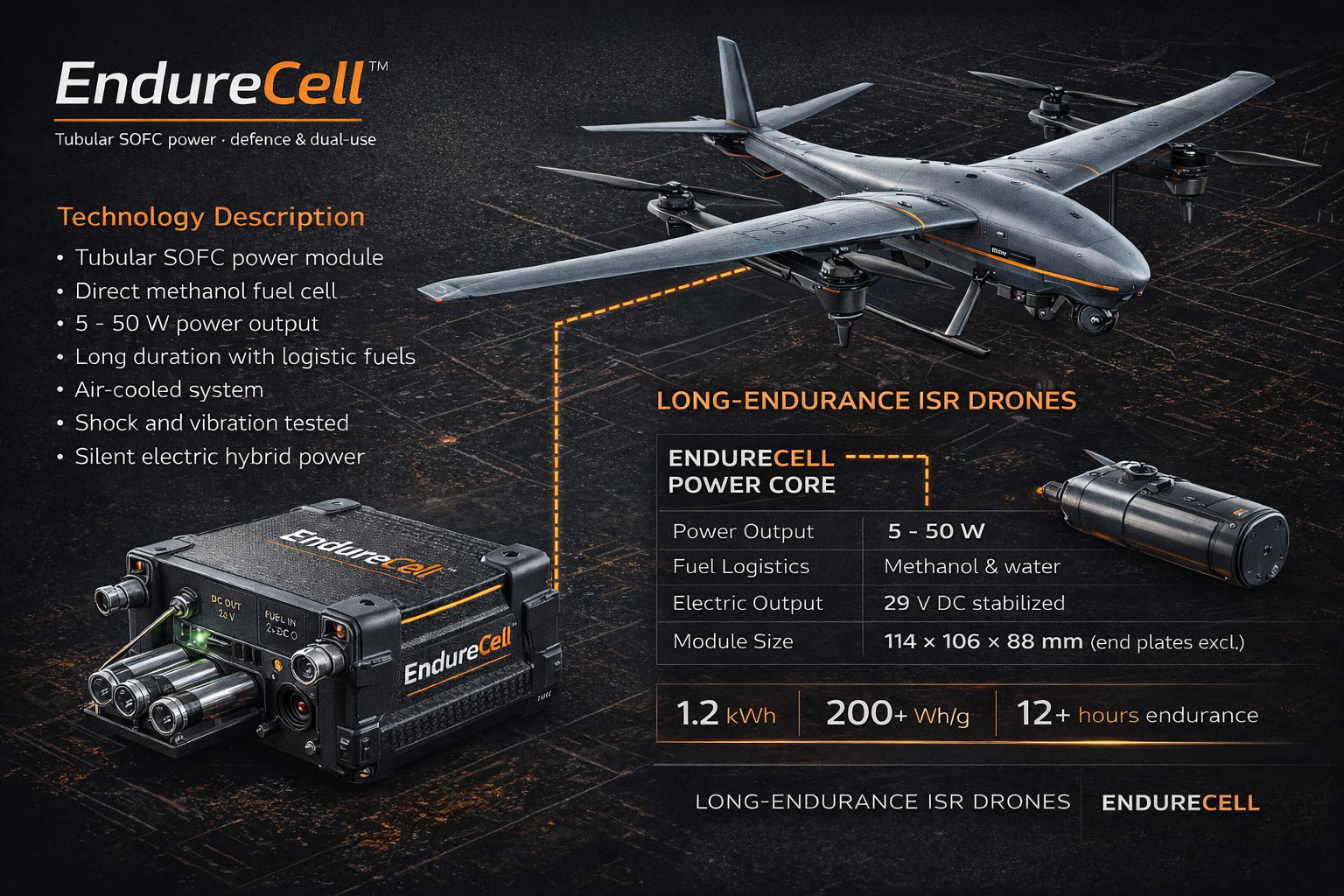
Long-endurance ISR drone power system
Hybrid-electric endurance: SOFC for cruise and battery sustain, with fuel-based refuel logistics.
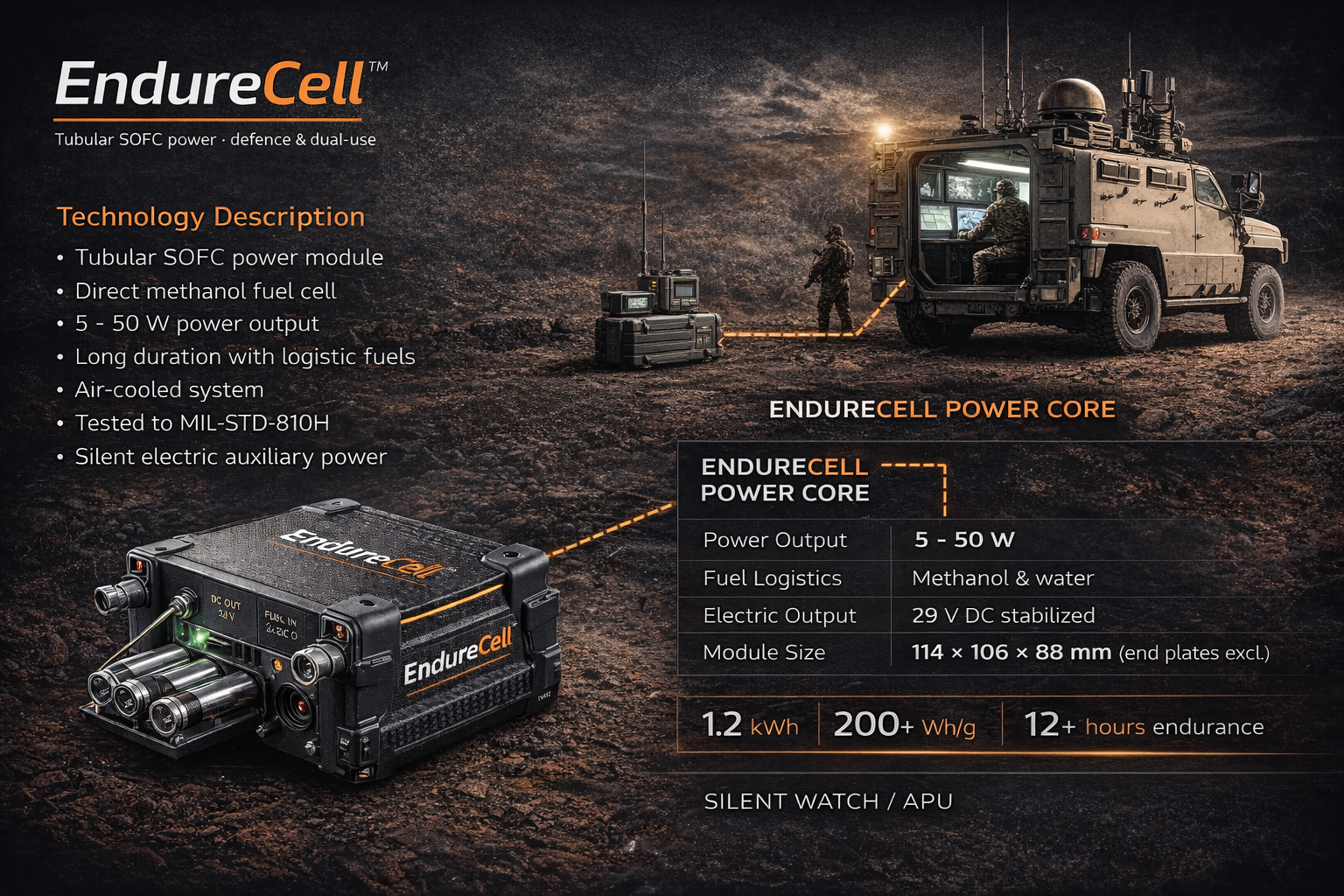
Silent watch / APU
Low-signature auxiliary power for vehicles and command posts—reduced idling, noise, and maintenance.
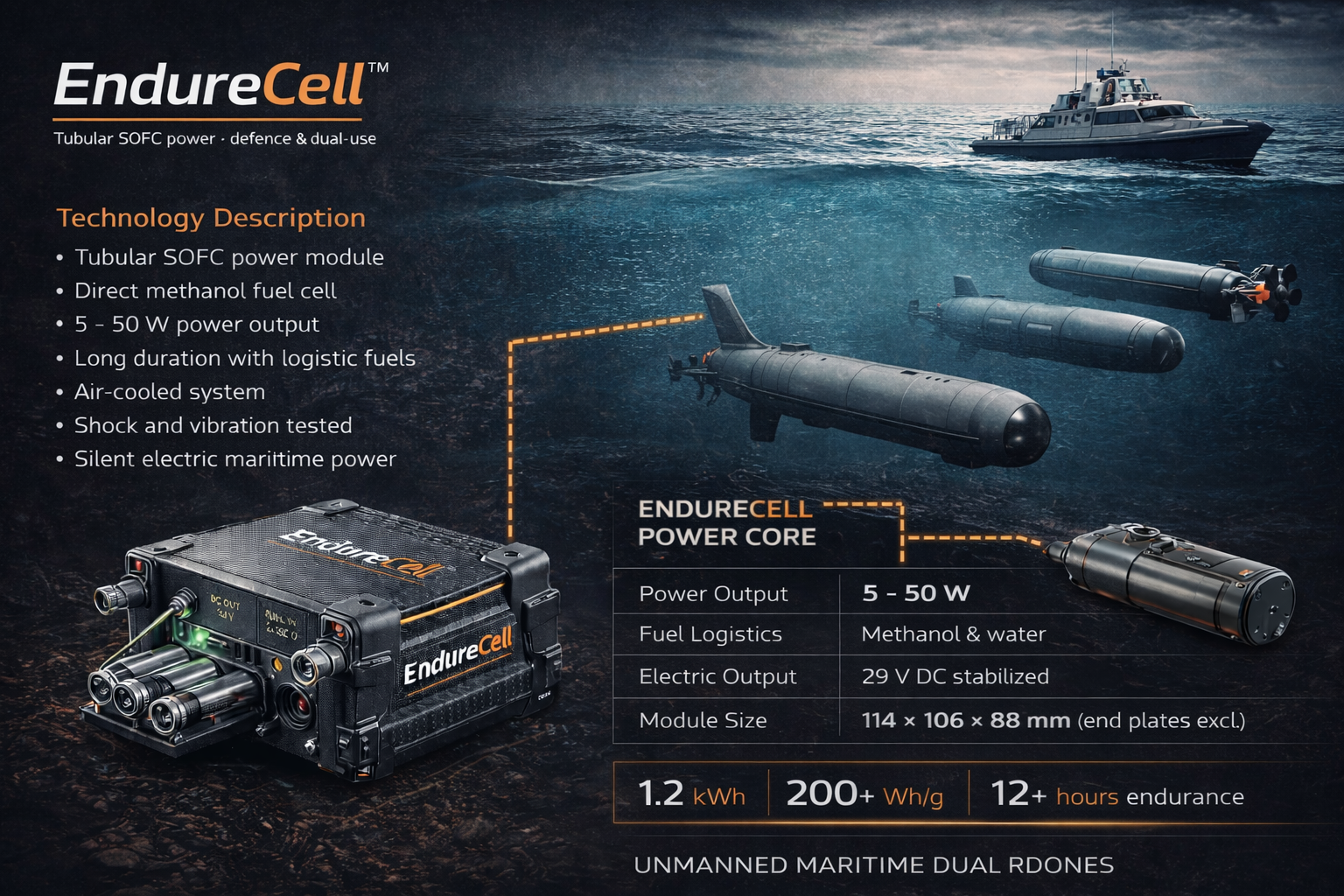
Unmanned maritime dual drones
Quiet, efficient electrical generation for surface and underwater unmanned systems, extending mission duration.
Dual-use infrastructure monitoring
Persistent off-grid power for sensors, comms relays, and remote monitoring nodes—defence and civilian deployments.
A manufacturing-first approach
EndureCell focuses on the highest-risk, highest-value component in tubular SOFC systems: the ceramic tube substrate.
Business model
- ✓ Tier‑2 supplier: tube chassis components for integrators and primes
- ✓ Tier‑1 modules: Power Core subsystems for UAVs and remote power
- ✓ Co‑development / NRE: program-aligned engineering
Trust & qualification
FAQ
Do you sell fuel cells or components?
Both paths are supported: tube chassis components for integrators and integrated Power Core modules for OEMs that want a standardized subsystem.
Why tubular instead of planar SOFC?
Tubular geometries are mechanically robust and can reduce hot-zone sealing complexity—important for vibration, thermal cycling, and rugged environments.
What fuels are supported?
Power Core is designed for hydrogen and can be configured for hydrocarbon fuels via reformate depending on balance-of-plant selection.
What does drone integration look like?
Typically a hybrid architecture: battery for takeoff/peaks; SOFC for cruise and battery sustain. Integration focuses on packaging, thermal routing, and power electronics.
Contact
Share your platform power requirement, bus voltage, fuel constraints, duty cycle, and environment profile.